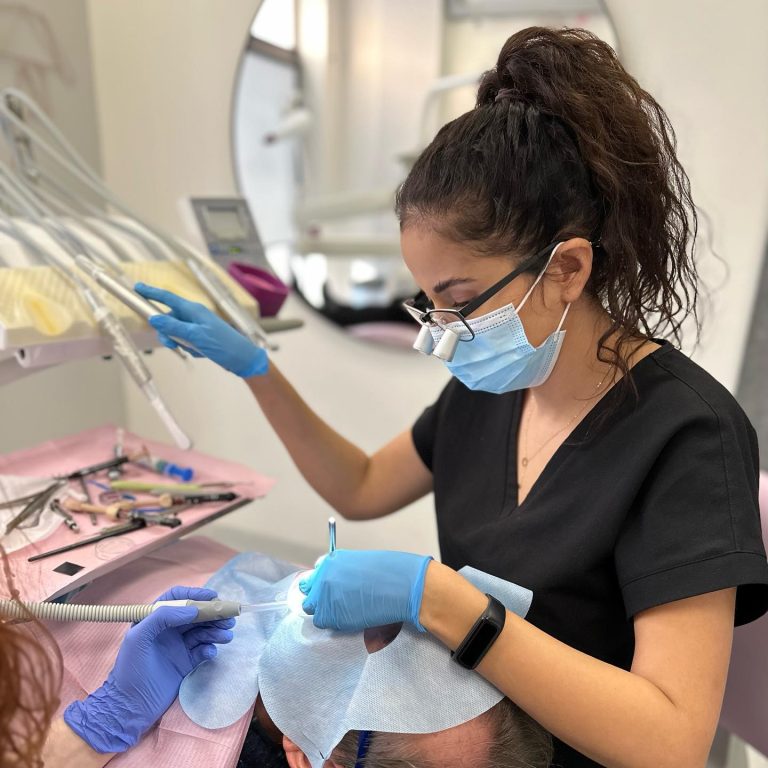
Dentist and dentist – what’s the difference? Since the moment of Polish’s accession to the European Union, there has been no distinction between dentists and dentists in our country. This was caused by the regulations unifying this term, which is why a person graduating from medical studies in the field of dentistry obtains the title of dentist. In many other countries, there is still a division into two specialties, because they are generally related to the treatment of teeth, but the dentist has more extensive knowledge and qualifications.
Dentist and dentist in Poland – can you show differences?
In 2002, when Poland became a member of the European Union, the dates were unified, which was not well received by doctors. Dentist vs. dentist – what’s the difference? Dentists had more knowledge and qualifications, which is why they felt degraded. Currently, the differences between dentist and dentist are only due to the nomenclature and origin of these words.
The term dentist in Greek is divided into two parts: stoma, meaning mouth, and logia, meaning science. The dentist specialist dealt with the treatment not only of the teeth, but of the entire oral cavity.
On the other hand, the term dentist derives from the Greek language, and more precisely it is about the element dens, which means tooth. This specialist only treated teeth.
Inmedical practice, there is no division into dentist and dentist, so a person graduating from the Faculty of Dentistry practises the profession of a dentist and is authorised to apply treatment in accordance with their knowledge of dentistry. This means that it diagnoses and treats patients presenting with teeth, periodontium, gum and mucosal diseases.
What is the difference between a dentist and a dentist in other countries?
Both in the UK and in Western countries, there is still a division – a dentist and a dentist are not the same. Therefore, people suffering from toothache know that they need to go to the dentist, and people struggling with periodontitis or periostitis to the dentist. In Poland, according to the applicable regulations (the Act on the Profession of Dentist), a dentist is authorized to treat diseases of the entire oral cavity and teeth, as well as the facial skeleton and surrounding areas.
In countries where the division in these medical professions is still in force, the name dentist or dentist will appear on the plate on the office. And each of these specialists will have different qualifications in the field of dentistry. They will be similar, but the dentist, in addition to treating teeth, can perform procedures in the entire area of the oral cavity.
What treatment will be performed by a dentist in Poland?
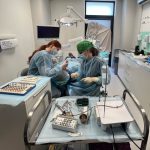
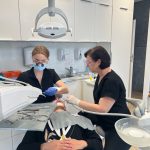
A dentist is a doctor who diagnoses and treats diseases of the teeth, jaw, and soft tissues of the mouth. Currently, the terms dentist and dentist are used interchangeably, but they mean the same profession. A dentist deals with the treatment of teeth, mainly caries, pulpitis and periodontitis. He or she conducts an initial visit, makes a diagnosis, refers for X-rays or tomography, and prepares the oral cavity for prosthetics.
The dentist provides:
- Preventive oral examination
- Carious cavity filling, performs partial reconstruction of lost tooth tissue
- Treatment of tooth roots – removal of inflammation – tooth nerve.
- Removes plaque and tartar
- Treats periodontitis, i.e. the tissues surrounding the tooth
- He performs tooth extraction.
Severe pain syndrome, swelling, congestion, blood flow or pus from the gums – all these are reasons to visit a dental clinic. It is necessary to undergo regular preventive examinations, check-ups, which will allow you to prepare an action plan in practice and recommend treatments to maintain the health of your teeth and mouth.
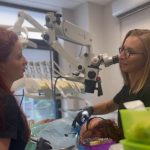
A dentist in our clinic performs an examination of the anatomy of the teeth and treatment of their root canals. In his work, he uses a microscope and special instruments that allow him to find and treat the most difficult canals (narrow, branched, curved, etc.). The microscope is used both in the treatment of caries and in the reconstruction of teeth through filling.
The mission of every dentist is to preserve teeth. That is why our specialists primarily identify difficult cases in the patient’s teeth that require immediate intervention. We advise you to visit a specialist regularly. Important! It is easy to prevent oral diseases, it is enough to consult a dentist at least 2 times a year.
You need to make an appointment with your dentist quickly if:
- There was an increased sensitivity of the enamel, a change in the appearance of the enamel and the entire tooth
- Toothache of any nature, even if the pain is minor
- The inflammation has appeared on the mucous membrane or in any area of the mouth and there is discomfort in general.
Postponing a visit to the dentist may end up with the need for tooth extraction. At best , root canal treatment under a microscope. Only regular visits to the dental clinic will protect against difficult to treat cysts on the gums and inflammation. The dentist can also react quickly when he notices the beginnings of periodontitis. If someone decides to undergo prosthetics or dental implants, they must also have a consultation with this specialist in terms of the condition of their teeth and oral cavity.