


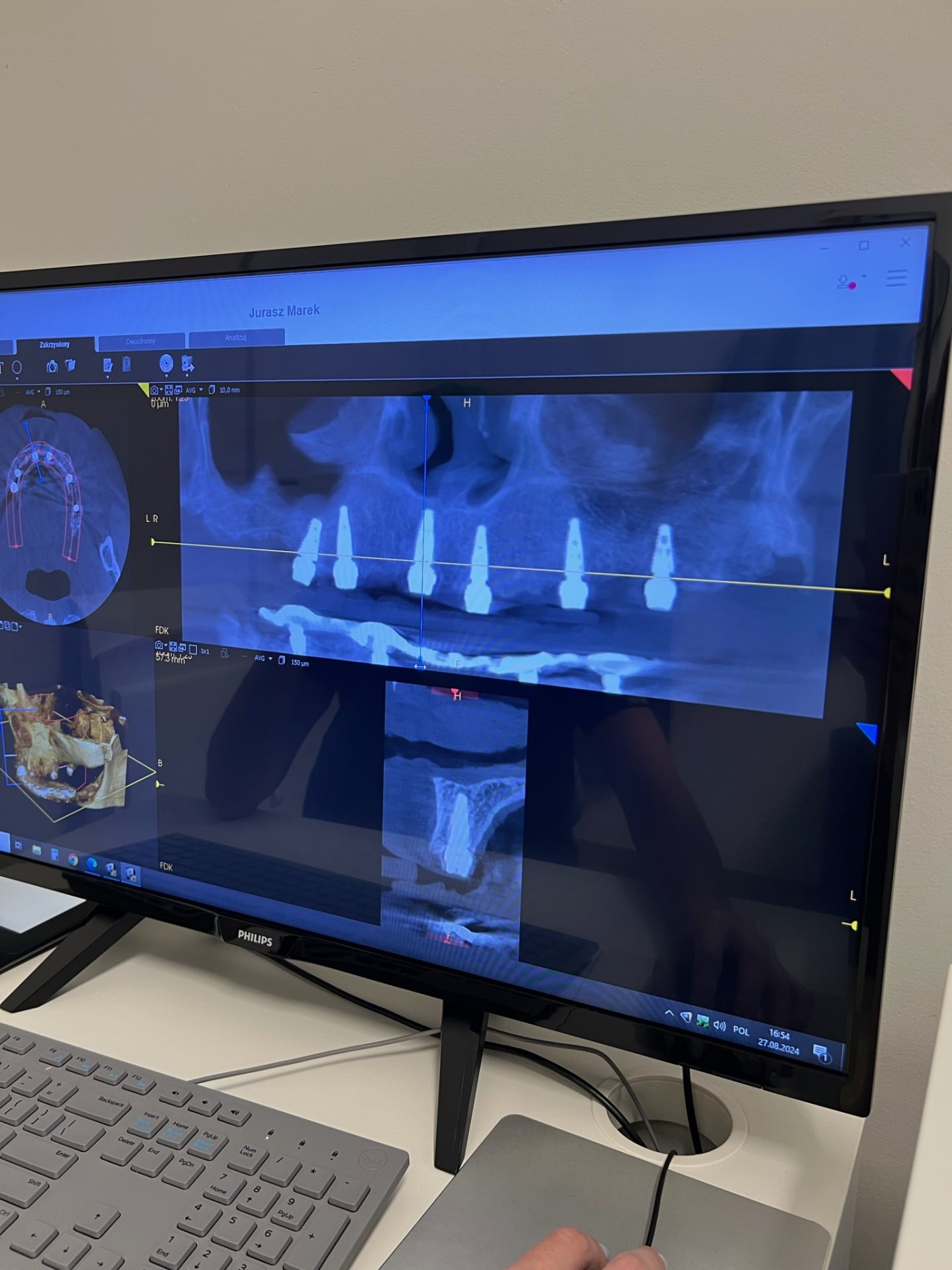
Description
What are microimplants?
Advantages of using microimplants
- Reduction of treatment time: Implants help to move teeth more effectively, which speeds up the process of correcting malocclusion.
- Enhanced Precision: They allow for more accurate control of the forces acting on the teeth, which is difficult to achieve with traditional braces.
- Multifunctionality: They can be used in a variety of treatment techniques, including fixed braces and aligners.
Where are implants used?
Microimplants can be used to treat both adults and children. They are often used by pediatric orthodontists when traditional braces are not sufficient to correct some complicated malocclusion. They can be used together with children’s braces to achieve better treatment results.
What does the microimplant procedure look like?
The procedure is performed under local anesthesia and usually takes 10 to 15 minutes. The implant is inserted into a selected place, which has been carefully planned by the orthodontist.
Is it safe to use micro-implants?
Yes, microimplants are safe as long as they are properly installed and monitored. The risk of complications is minimal and there is usually no permanent damage to the bones or soft tissues.
Are micro-implants visible?
Such orthodontic implants are very small and are usually not visible after placement. Their presence does not affect the aesthetics of the patient’s smile.
Do you dream of a simple and healthy smile? Orthodontic treatment is the key to correcting malocclusion and improving the aesthetics of teeth. On our website you will find out what treatment methods we offer, how the process works and who it is for. Check the details: Orthodontic treatment.
Are you wondering what is the difference between an orthodontist and a dentist and which specialist will be right for your needs? In our article, we explain what their competences are, when it is worth visiting each of them and what services they offer. Find out more and dispel your doubts: Orthodontist and dentist – what is the difference?.
Phone: 71 880 90 50


