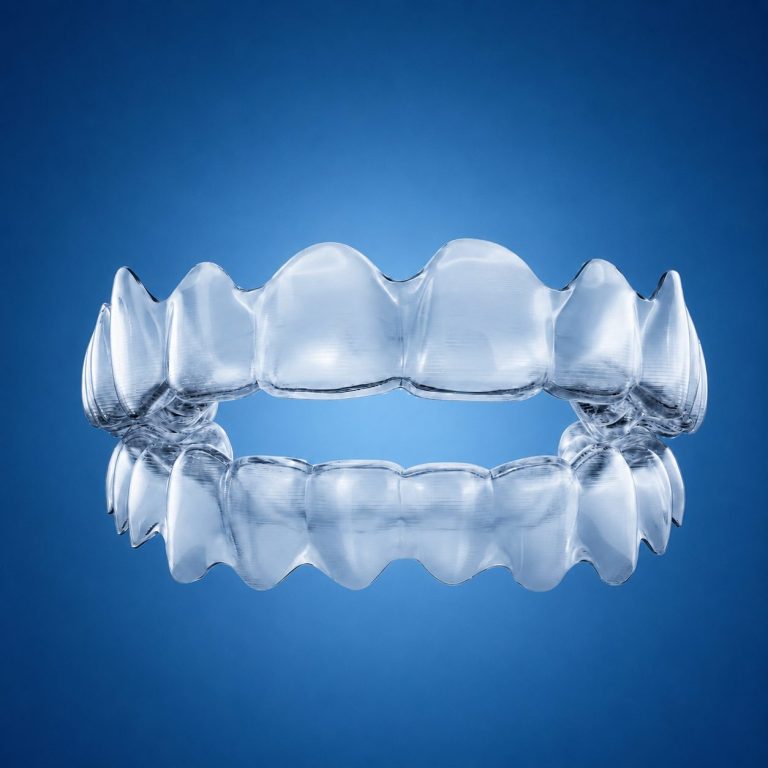
Orthodontic treatment is normally planned in 2 arches. 1 Treatment of 1 arch is the exception, not the norm.
Orthodontics doesn’t just treat what you see in front. What is treated is the bite, or how the upper and lower teeth align with each other and how they work during biting, chewing and speech. That’s why standard orthodontic treatment is usually planned for both arches, not just where the patient sees crooked teeth in the mirror.
What do the official recommendations say?
The official protocol quoted by the British Orthodontic Society and the Department of Health says straightforwardly that orthodontic treatment normally ends with braces in both arches, and treatment of one arch should be undertaken only if that is enough to achieve a quality result. This is very important: the starting point is not “let’s do one arch because it’s cheaper,” but “two arches are the standard, and one arch is the exception.”
Why is it so important?
Because the upper and lower teeth do not work separately. They form one system. The American Association of Orthodontists defines a proper bite as one in which the teeth meet in a way that supports biting, chewing and speech. If treatment focuses on only one arch, it is easy to improve the aesthetics of the front, but impair the relationship between the arches. The result may look attractive in the “before and after” photo, but be functionally weaker
Where do the “cheaper” single arch offers come from?
Most often from a reduction in the scope of treatment. It’s a bit like renovating just the wall you see from the entrance. The British Orthodontic Society (BOS) describes limited treatment orthodonticsas treatment that usually involves only the front six teeth in one or both arches. It can be used, but only after all diagnostic criteria have been evaluated and the patient has also been presented with full, comprehensive treatment options. In other words: such an option may exist, but should not be sold as a default “cheaper substitute” for full treatment.
What are the risks of treating only 1 dental arch?
This is where the BOS doesn’t beat around the bush. In its official material for patients, it states that treatment focused only on the front teeth can make the way the teeth meet worse. In the long run, this can be associated with headaches, tooth grinding or damage to restorations. That’s why single arch treatment is not a “smart money-saver” for everyone, but a risky solution if one picks too lightly.
And what does it look like in Invisalign overlay treatment?
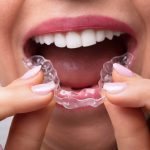
The Invisalign system is not a method “for minor frontal corrections” but a tool for planning and guiding the treatment of various malocclusions, including problems affecting the relationship between the arches. Invisalign’ s official materials describe cases involving Class II, Class III, open bite, deep bite, crowding and gaps, among others, referring specifically to the occlusal relationship and alignment of the two arches. This is another argument that a treatment plan should look more broadly than just at the “nicer front.”
How do we work on treatment at Stomo Clinic?
At Stomo Clinic, we don’t approach overlay treatment as a cosmetic gimmick. We first evaluate the bite, the anatomical conditions and the realistic goal of the treatment. Only then do we plan the treatment so that the result is not only aesthetic, but also healthy and stable. That’s why we don’t sell patients a “cheaper version of a smile” if it would mean a greater risk of problems later. Our goal is a well-planned treatment, according to orthodontic standards, not a quick result for the sake of advertising. We describe the approach to the overlay treatment itself in more detail at Invisalign Wrocław
What should the patient hear at the consultation?
The patient should hear not only the price, but also the answers to a few simple questions: whether the treatment includes an evaluation of the entire bite, whether the improvement of one arch will not interfere with contacts with the other, whether the full treatment option for both arches is also presented, and whether the lower price is not simply due to a smaller scope of treatment. If these answers are missing, it is not a good starting situation for an informed decision.
The standard in orthodontics is treatment planned in both arches, because only then can the entire bite be responsibly controlled. Treatment of one arch is not completely out of the question, but should only apply to a small number of well qualified cases. When it becomes a marketing shortcut to show a lower price, the risk is passed on to the patient – health-wise and financially. Therefore, before starting therapy, it is worth asking not “can it be cheaper?”, but rather: is this treatment plan really good for my bite?
Sources
British Orthodontic Society / Department of Health – Treatment Protocol: standard treatment in both arches; one arch only if sufficient for quality outcome.
British Orthodontic Society – Limited Treatment Orthodontics: Treatment limited to the anterior teeth may be appropriate only after a full diagnosis and after comprehensive options are also presented; it can also worsen whites and lead to long-term problems.
American Association of Orthodontists – Bite: the goal of treatment is a healthy, functional bite, not just straighter looking teeth.
Invisalign – What Invisalign Treats: The manufacturer’s official materials show the treatment of defects relating to the relationship between the two arches and the overall occlusion.