


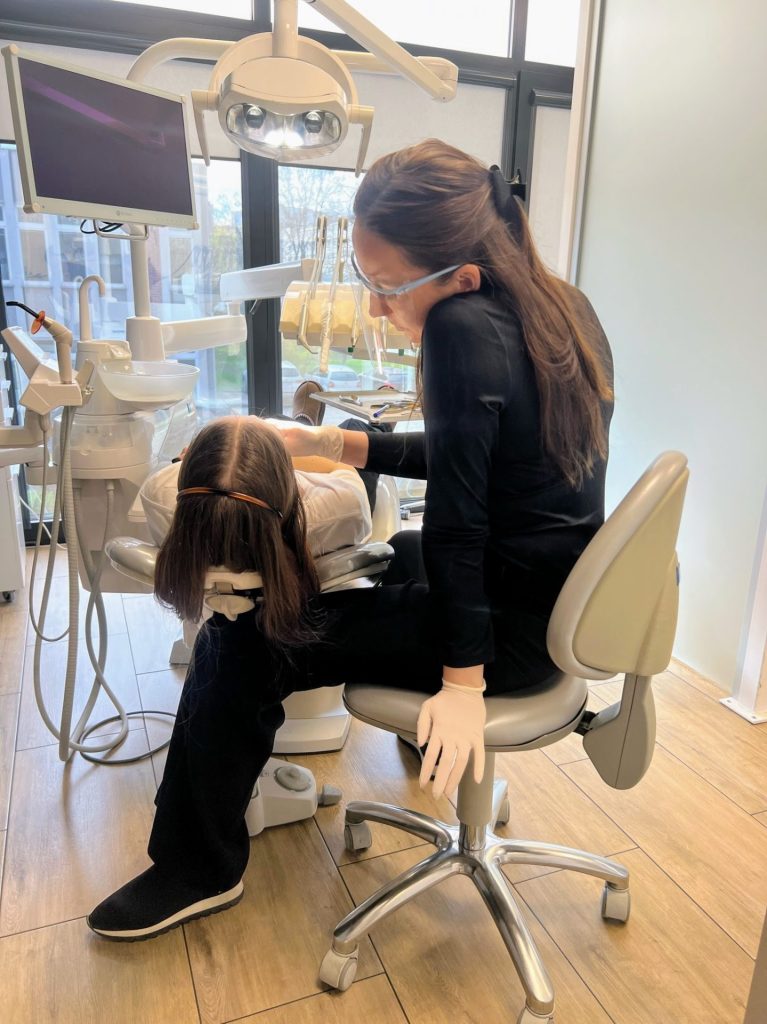
Dentist for childrenhow toprepare a child for a visit

Why choose a dentist for children?
Healthy teeth from an early age are the foundation of a beautiful smile and proper oral development. A children’s dentist is a specialist who not only cares about the dental health of the youngest patients, but also makes every visit comfortable, painless and friendly. Unfortunately, many parents visit the dentist with their children only when there is pain or decay – and this can cause stress and reluctance for subsequent visits.
To avoid dental problems and make your child eager to visit the dentist, it’s a good idea to ensure regular check-ups from an early age. In this article, you will learn what the first visit to a pediatric dentist is like, how to prepare a toddler for the visit and when it is a good idea to go to the dentist for the first time.
When is the first dental visit for children?
Many parents wonder when to take their child to the dentist for the first time. Experts recommend that the first check-up should take place as early as Between 6 and 12 months of age , that is, after the appearance of the first deciduous teeth. Although it may seem too early, it is this moment that is crucial to assess the proper development of the teeth and implement prevention to prevent future problems.
Why make an early appointment for your child to see a pediatric dentist?
- Caries prevention – milk teeth are much more susceptible to decay than permanent teeth. The dentist will assess the condition of the enamel and advise on how to effectively take care of the child’s oral hygiene.
- Early detection of malocclusion – the first abnormalities in the alignment of the teeth and jaw can be noticed at the infant stage, which may need to be corrected in later years.
- Avoiding fear of the dentist – regular visits from an early age help the child become accustomed to the office and the dentist, which minimizes the risk of dentophobia in the future.
- Parent education – the dentist will explain what hygiene habits are most important, how to avoid “bottle decay” and what foods promote healthy teeth.
- Evaluate your child’s habits – thumb sucking, prolonged use of a pacifier or improper breathing through the mouth can negatively affect jaw and bite development. A dentist can help correct these habits early on.
It is worth remembering that the earlier a child starts visiting the dentist regularly, the greater the chance for a healthy and beautiful smile in the future. It is not worth waiting until there is pain – the first visit should be preventive and educational to avoid stress and negative associations associated with the dentist.
Most common dental problems in children
Caries of deciduous teeth
Caries is the most common dental problem in children. It is mainly caused by eating sweets, inadequate oral hygiene and drinking sweetened beverages, especially before bedtime. A pediatric dentist may recommend fluoridation, tooth sealing and education on proper dental care.
Malocclusion and abnormal habits
Thumb sucking, pacifiers, breathing through the mouth – all of these can influence the development of malocclusion. A children’s dentist monitors jaw development and may suggest an orthodontic consultation if he or she notices the first signs of abnormalities.
Toothache and inflammation
Toothache in a child is a signal that you should go to the dentist as soon as possible. It can be the result of decay, trauma or eruption of new teeth. A quick response avoids more serious complications and stress for the toddler.
How to prepare a child for a visit to the dentist?
The first visit to the dentist can be stressful for both the child and the parents. However, proper preparation will make it a positive experience that will tame the toddler to the dentist’s office and encourage regular visits. The key to success is the right approach – building positive associations and avoiding scaring the dentist.
How to help a child get used to visiting the dentist?
- Don’t scare your child about the dentist – avoid phrases like “If you don’t brush your teeth, the dentist will pull them out” or “It will hurt.” Fear of the dentist often stems from negative stories from adults, not from the child’s own experience.
- Talk about the visit in a positive way – explain that a dentist is someone who cares about the health of your teeth and helps make them strong and beautiful. You can say that it’s such a “smile check,” whereby the dentist will check that all the teeth are healthy.
- Introduce the child to the dental office – a child’s adaptation visit to the dentist, during which the child will see the dental chair, get to know the doctor and get used to the new place without any procedures.
- Read books and watch fairy tales about dentists – there are many fairy tales and educational books on the market that present a visit to the dentist in an accessible way. This will help your child learn what to expect.
- Be a good example – if the child sees that the parent takes care of his or her teeth and goes to the dentist regularly, the child himself or herself will be more willing to accept follow-up visits.
- Choose a friendly dental office – a dentist for children should have experience working with the youngest patients and know how to create a friendly atmosphere. Colorful decor, the opportunity to watch cartoons during the visit and rewards for courage make the child feel comfortable.
- Take your child’s favorite toy – this will help the toddler feel more confident and give him a sense of security in the new place.
- Don’t promise rewards for the visit, but reward a positive attitude – instead of saying “if you’re good, you’ll get a gift,” it’s better to praise the child after the visit and choose a new toothbrush together, for example.
Remember that the first visit should be a pleasant experience for the child. With the right preparation and choice of specialist, the dentist will become someone for the child who does not need to be afraid, and taking care of teeth will become a natural habit for life.
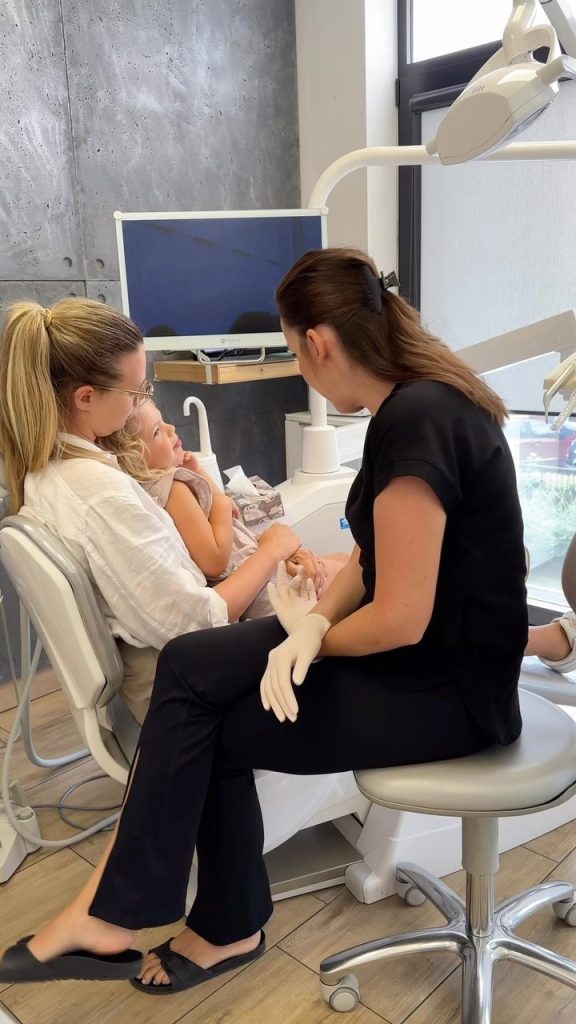
What treatments does the dentist offer for children?
Professional dental offices dedicated to the youngest patients are available:
- Teeth se aling – covering fissures with a special varnish that protects against decay.
- Fluoridation – Enamel strengthening to prevent cavities.
- Filling cavities in deciduous teeth – treating decay to prevent premature tooth loss.
- Treatment with nitrous oxide (laughing gas) – helps children relax during treatment.
- Extraction of deciduous teeth – when a deciduous tooth blocks the eruption of the permanent dentition.
- Orthodontic consultation – if malocclusion is noticed.
Dentist for children – frequently asked questions
From what age should a child go to the dentist?
The first visit should take place around the age of 6 months or, at the latest, by the age of 1 year.
Do milk teeth need to be treated?
Yes! Decay in deciduous teeth can lead to infection, pain and problems with eruption of permanent teeth.
What kind of anesthesia is used in children?
Most commonly, u003Cstrongu003Ecomputer anesthesiau003C/strongu003E, local anesthesia or laughing gas are used.
How often should a child visit the dentist?
Follow-up visits are recommended every u003Cstrongu003E6 monthsu003C/strongu003E or as recommended by the dentist.
Summary – why choose a dentist for children?
A children’s dentist is a specialist who provides the youngest patients with professional dental care in a comfortable and friendly atmosphere. Regular visits, proper preventive care and parental education are the key to a healthy smile for your child. Don’t wait for the pain – make your little one’s first appointment today and take care of their beautiful, healthy teeth for life!
Phone: 71 880 90 50


